 |
|
|
|
|
|
|
|
|
|
|
|
|
|
|
|
|
|
|
|
|
|
|
|
|
||||||||||||||
|
|
|
|
|
|
|
|
|
|
|
|
|
|
|
|
|
|
|
|
|
|
|
|
|
||||||||||||||
 |
||||||||||||||||||||||||||||||||||||||
 |
||||||||||||||||||||||||||||||||||||||
|
1972 Müller enrols at the University of Bremen and begins
a course of literature studies; he spends the next three semesters interpreting texts on the aesthetic theories of the Frankfurt School. He finds the staged socio-critical orientation of the course tedious, however, and is equally irritated by the academic rules and regulations – he particularly detests terms such as implicit and explicit. He deliberately ignores his seminar paper and from now on only reads books that give him pleasure. In the summer of the following year he travels in the Aegean and returns in a contentedly sun-drenched state of mind. Soon after this he decides to abandon his studies. 1974 - 1979 He teaches as a lecturer at the Hochschule für Gestaltung (School of Design) in Bremen. He leaves his wife and family and moves into Kohlhökerstraße 60 A, a studio collective and living space he shares with friends. It is a convivial place that houses and welcomes a broad range of creative spirits, and gradually becomes a major cultural incubator within the region. In this stimulating environment he uses graphic techniques to explore transformation sequences. In 1977 he exhibits some of the results of these studies at the Kunstschau Böttcherstrasse in Bremen (together with works by Wolfgang Michael and Norbert Schwontkowski). In the late autumn of the same year he unexpectedly meets the girlfriend of one of his friends. They go travelling together and she becomes pregnant; their son Kjen is born in Bremen, and when he is a few months old, the new family goes to live in Spain for six months. 1980 His daughter Anna is born. He moves to a former industrial site in the harbour area of Bremen, where a number of artists are setting up a studio collective. In the following years he studies labyrinthine structures and seeks to develop an aesthetic form where the painterly trace of retarded time channels apparent formlessness into fixed formations. A preoccupation with condensed materiality, and with ›beginning‹ and ›end‹ as the factors that determine all temporal structures, leads him to develop objects which as spatial facts seem suited to the visualization of ambiguity. |
In 1987 he exhibits a selection of works from this period at Galerie Silvia Menzel in Berlin.
1988 He takes part in the exhibition Hamburg/Vancouver at Pitt International Galleries in Vancouver and contributes two works to Collage/Decollage at Galerie Silvia Menzel in Berlin. He spends the early summer of 1991 in Italy, and on his return curates the exhibition It’s time at the Haus am Wasser in Vegesack, presenting six works by six artists that explore different concepts of time. Basing his own new work on the principle of mirror symmetry, he creates Überschaubare Gegenstände (Discernible Things) – chairs, tables, cups, clocks, etc. that all exist in duplicate form and nevertheless constitute organically related entities. Some of these are subsequently shown in the exhibition Interferenzen at the Kunsthalle Bremen. In the catalogue to accompany this exhibition Wolfgang Winkler writes: The regressive desire for a wholly immediate experience must be abandoned. Instead, the mechanism of the logic of doubling serves as a possible means of investigation, whereby all attempts at linear placement must also be abandoned, as every place can have several simultaneous existences. The crucial thing, therefore, is to be able to find the other place – or places – of each respective location, to ›linger‹ in all of these places in one’s spatial imagination at the same time. ›Place‹ is thereby to be understood in its respective uniqueness and as a spatial constellation of separate, similar/dissimilar locations. And ›time‹ is to be experienced in relation to the perceived multilocality of places as a continuity of assembled simultaneities. While it is easy to make these demands upon the abstract imagination, it is much harder to find such experiential realms in the everyday world. And if art does not wish to remain purely an art of ideas and to occupy the status of mere assertion, it must not represent its abstract notions in an illustrative way but must present them in a manner that can be experienced – as in the form of a response.   |
|||||||||||||||||||||||||||||||||||||
 |
||||||||||||||||||||||||||||||||||||||
 |
||||||||||||||||||||||||||||||||||||||
|
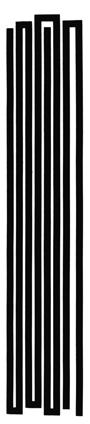
It's time
Invitation card for the exhibition at Haus am Wasser in Vegesack 1991 |
||||||||||||||||||||||||||||||||||||||
 |
||||||||||||||||||||||||||||||||||||||
 |
||||||||||||||||||||||||||||||||||||||
 |
||||||||||||||||||||||||||||||||||||||